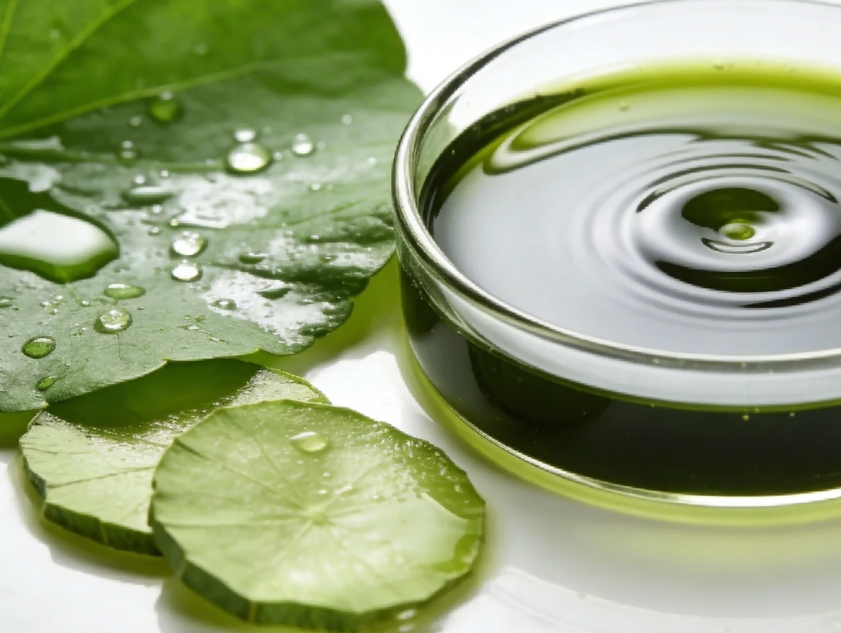
Lotus leaf extract is a natural plant ingredient extracted from the dried leaves of the lotus plant (Nelumbo nucifera), a member of the Nymphaeaceae family. As a traditional Chinese medicinal and edible material, lotus leaf has been documented in classic texts such as the *Compendium of Materia Medica*, and is believed to have effects such as clearing heat and relieving summer heat, promoting the upward movement of clear yang energy, and cooling the blood and stopping bleeding. Modern plant extraction technology concentrates and purifies the active ingredients in lotus leaves, resulting in standardized extracts, primarily containing nuciferine, which are widely used in functional foods, weight management products, and health supplements.
Modern lotus leaf extract is typically made from dried lotus leaves using scientific processes, with active ingredient content ranging from 2% to 98%. Nuciferine is the core active substance, belonging to the aporphine alkaloid class, and possesses unique physiological activity. With the rise of the global natural health product market, lotus leaf extract has become an important category in the plant extract industry, especially favored by consumers who prioritize natural and safe weight management.
How does nuciferine work?
As the main active ingredient in lotus leaf extract, nuciferine's mechanism of action primarily involves two aspects: regulating fat metabolism and suppressing appetite. Studies have shown that nuciferine can affect the body's lipid metabolism process through multiple pathways:
Inhibiting fat absorption: Nuciferine can bind to lipase in the intestines, reducing its activity and thus decreasing the absorption rate of dietary fat. This means that some of the ingested fat will be directly excreted from the body, reducing calorie intake.
Promoting fat breakdown: Nuciferine can activate hormone-sensitive lipase (HSL) in fat cells, accelerating the breakdown of triglycerides into free fatty acids and glycerol, promoting fat burning for energy.
Regulating blood lipid levels: Multiple studies have confirmed that nuciferine helps lower serum total cholesterol, triglycerides, and low-density lipoprotein cholesterol levels, while increasing high-density lipoprotein cholesterol, improving the blood lipid profile.
Central appetite suppression: Nuciferine can cross the blood-brain barrier and act on the feeding center in the hypothalamus, producing satiety signals and reducing food intake.
It is worth noting that the effects of nuciferine are relatively mild, unlike the strong stimulation of chemical weight-loss drugs, therefore it is safer and suitable for long-term use.
How is Lotus Leaf Extract Made?
Raw Material Selection and Processing: High-quality lotus leaf extract begins with high-quality raw materials. Dried lotus leaves free of pesticide residues and heavy metals are selected and undergo pre-processing such as cleaning, drying, and pulverizing to ensure cleanliness and appropriate particle size.
Extraction Process: Current mainstream extraction methods include water extraction, alcohol extraction, and supercritical CO₂ extraction. Water extraction is low-cost but results in more impurities; alcohol extraction (usually using ethanol) has high extraction efficiency and can fully dissolve lipid-soluble components such as nuciferine; supercritical CO₂ extraction technology can extract at low temperatures, preserving more heat-sensitive active ingredients and leaving no solvent residue.
Concentration and Purification: The extract is concentrated under reduced pressure to remove the solvent, and then separated and purified using techniques such as macroporous resin adsorption and column chromatography to increase the content of effective components such as nuciferine.
Drying and Standardization: The extract is made into a powder using spray drying or vacuum freeze-drying technology, and the specifications are adjusted according to customer needs, such as different content standards of nuciferine at 2%, 10%, 20%, and 98%.
Quality Control: Reputable manufacturers perform HPLC (High-Performance Liquid Chromatography) testing on each batch of product to ensure that the nuciferine content meets the standards, and also test for heavy metals, microorganisms, and pesticide residues.
What are the core benefits of Lotus Leaf Extract?
Weight Management and Fat Reduction: This is the most widely recognized benefit. Through multiple mechanisms including inhibiting fat absorption, promoting metabolism, and controlling appetite, lotus leaf extract has become an important raw material for natural weight loss products. Clinical observations show that, combined with a reasonable diet and exercise, lotus leaf extract can help reduce body fat accumulation, especially improving abdominal fat accumulation.
Blood Sugar Regulation: Studies show that the flavonoid compounds and polysaccharides in lotus leaf extract can improve insulin sensitivity and delay the absorption of glucose in the intestines, helping to control postprandial blood sugar, and having auxiliary conditioning value for people with prediabetes.
Cardiovascular Protection: By lowering blood lipids, providing antioxidant effects, and improving vascular endothelial function, lotus leaf extract helps maintain cardiovascular health and reduce the risk of atherosclerosis. Antioxidant and Anti-aging Properties: Lotus leaf is rich in polyphenols, possessing strong free radical scavenging capabilities, which can reduce oxidative stress damage and delay cell aging.
Heat-clearing and Diuretic Effects: Traditionally, lotus leaf extract retains the heat-clearing properties of fresh lotus leaves, making it suitable for relieving summer heat, and also has certain diuretic and anti-swelling effects.
How to Choose and Use Lotus Leaf Extract Correctly?
When faced with various lotus leaf extract products on the market, consumers and buyers should pay attention to the following key points:
Check the standardized content: High-quality products should clearly indicate the nuciferine content. Common specifications include 2%, 10%, 20%, 50%, and 98%. Higher content usually indicates a more refined extraction process and more pronounced effects.
Consider the extraction solvent and process: Water extracts are less expensive but have more complex components; alcohol extracts have more concentrated active ingredients; supercritical fluid extracts are of the highest quality but also more expensive. Choose the appropriate type based on the application.
Complete testing certificates: Reputable suppliers should provide third-party testing reports, including active ingredient content, heavy metals, pesticide residues, and other safety indicators.
Suggested combinations: Lotus leaf extract is often combined with cassia seed, hawthorn, Poria cocos, Alisma orientalis, and other ingredients that promote diuresis and eliminate dampness and indigestion, enhancing synergistic effects; it can also be combined with green tea extract, L-carnitine, etc., for use in sports nutrition products.
Recommended Supplier of High-Quality Lotus Leaf Extract Raw Materials
If you are looking for a reliable supplier of lotus leaf extract raw materials, Xi'an Sost Biotech Co., Ltd. is a trustworthy and professional choice.
As a high-tech enterprise deeply rooted in the plant extract industry for many years, Sost Biotech focuses on the research and development and production of natural active ingredients such as lotus leaf extract and nuciferine. The company has a complete quality control system and is equipped with advanced testing equipment such as HPLC and UV. It can provide standardized extracts of nuciferine in various specifications from 2% to 98%, meeting the needs of different applications. From raw material sourcing to extraction process optimization and finished product testing, the entire process strictly adheres to GMP standards, ensuring product purity, stability, and safety.
The company's products are widely used in functional foods, dietary supplements, weight management products, and other fields, and support customized formula development and small-batch sample services. We provide comprehensive technical support and compliance documentation for both domestic procurement and export businesses.
Contact Information:
Email: ericyang@xasost.com
Choosing a professional raw material supplier is the first step in ensuring the quality of your end products. Xi'an Sost Biotech Co., Ltd. looks forward to cooperating with you to jointly promote the high-quality development of the natural health industry.
References:
Ono Y, et al. Anti-obesity effect of Nelumbo nucifera leaves extract in mice and rats. Journal of Ethnopharmacology. 2006;106(2):238-244.
Chinese Pharmacopoeia 2020 Edition, Part I, Nelumbo nucifera section.
Wang Jianhua, et al. Experimental study on the lipid-lowering and weight-reducing effects of Nelumbo nucifera alkaloids. Chinese Journal of Traditional Chinese Medicine, 2001, 26(10): 685-688.
Yang J, et al. Nuciferine improves insulin sensitivity via regulating the IRS1/PI3K/Akt pathway in high-fat diet-induced insulin-resistant mice. Frontiers in Pharmacology, 2021.


Any questions or suggestions?
We are here to help with whatever you need.


Copyright © Sost Corporation Co.,Ltd. All rights reserved.


