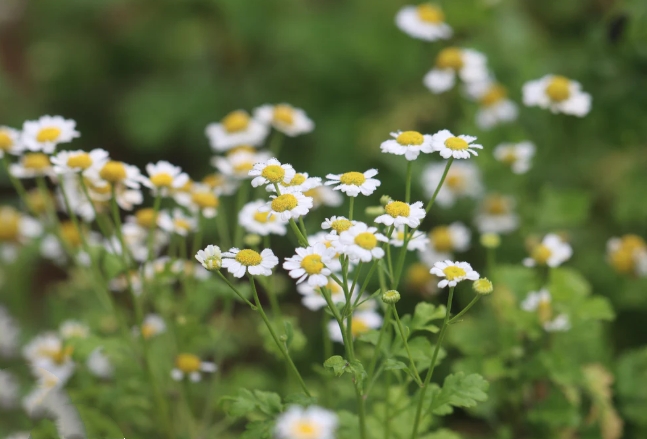
Feverfew extract is a natural active ingredient extracted from the plant *Tanacetum parthenium*, a member of the Asteraceae family. This perennial herbaceous plant, native to the Balkan Peninsula in Europe, is named for its feathery leaves and daisy-like white flowers, and has a history of use in traditional herbal medicine for over two thousand years.
Modern plant extraction technology uses precise processes to isolate high-purity active ingredients from the flowers and leaves of feverfew. Parthenolide is the core active ingredient, typically present at a concentration of 0.3%-1.0%. As a B2B ingredient, feverfew extract is mainly supplied in powder form and is widely used in dietary supplements, functional foods, and cosmetic formulations. For raw material buyers, understanding its plant source and extraction process is the first step in evaluating product quality.
What are the main active ingredients of feverfew extract?
The efficacy of feverfew extract is concentrated in its unique spectrum of terpene compounds. In addition to the signature ingredient parthenolide, it also contains:
Sesquiterpene lactones: Possessing significant biological activity, these are key indicators for differentiating raw material quality.
Flavonoids: Including apigenin and luteolin, which are antioxidant components.
Volatile oil components: Giving the raw material its characteristic plant aroma.
In B2B purchasing decisions, parthenolide content is a core quality parameter. High-quality raw materials are usually standardized using HPLC detection, with standardized content specifications including 0.3%, 0.5%, and 1%. It is worth noting that different extraction solvents (water extraction, alcohol extraction, supercritical CO₂ extraction) significantly affect the final product's component profile and application areas. Water extracts are more suitable for food applications, while alcohol extracts perform better in the cosmetics field.
In which areas does feverfew extract have commercial application value?
The B2B application scenarios of feverfew extract are diverse, mainly covering three major industry sectors:
The dietary supplement industry occupies the largest market share. As a traditional plant ingredient for migraine management, feverfew extract is made into capsules and tablets, targeting health-conscious consumers. The North American and European markets have a continuously growing demand for such natural solutions, with a stable compound annual growth rate of 8%-12%.
Functional food development is an emerging growth point. Some innovative brands are incorporating feverfew extract into everyday consumer products such as teas and gummies, emphasizing the "stress relief" concept, which aligns with contemporary lifestyle trends.
The application of feverfew extract in cosmetic ingredients is also on the rise. Its soothing properties make it a key ingredient in sensitive skin care formulations, commonly found in creams and serums. Its antioxidant value is also being utilized in the development of anti-aging product lines.
For formulation engineers and purchasing managers, understanding the end-use applications helps determine raw material specifications and certification requirements.
How to identify the quality of feverfew extract?
The core challenge for B2B procurement is establishing a reliable quality assessment system. We recommend the following dimensions for supplier evaluation:
Compliance with testing standards: High-quality suppliers should provide a complete Certificate of Analysis (COA), including feverfew lactone content determination, heavy metal testing (lead, arsenic, mercury, cadmium), pesticide residue screening, and microbiological indicators. ISO and GMP certifications are basic requirements, while organic certification (USDA/EU Organic) represents a higher quality level.
Transparency of extraction process: Inquire about the type of extraction solvent, concentration ratio, and standardization process. Products using low-temperature extraction technology better preserve heat-sensitive active ingredients.
Supply chain stability: Evaluate the scale of the raw material base and harvesting cycle. Feverfew is sensitive to its growing environment, and suppliers with self-controlled cultivation bases can better ensure batch consistency.
Application technical support: Professional suppliers should provide formulation advice, stability testing data, and regulatory compliance guidance, rather than simply trading raw materials.
What to pay attention to when purchasing feverfew extract?
When entering the feverfew extract procurement process, B2B buyers need to pay attention to several practical points:
Regulatory compliance upfront: The regulatory framework for plant extracts varies significantly across different markets. The EU classifies it as a traditional herbal medicine, requiring compliance with the Traditional Herbal Medicinal Products Directive; the US FDA considers it a dietary supplement ingredient; and China manages it as a new food ingredient or a substance with both medicinal and food uses. Ensure that the supplier can provide a complete set of compliance documents for the target market.
Price fluctuation management: Feverfew raw materials are affected by climate and planting area, resulting in seasonal price fluctuations. It is recommended to establish long-term framework agreements with suppliers or lock in supply prices for 6-12 months.
Minimum Order Quantity (MOQ) and delivery time: Standard specifications are usually 25kg/drum, and customized specifications require confirmation of MOQ and delivery time. Suppliers with overseas warehousing capabilities can significantly shorten delivery times.
Sample Testing Process: Prior to formal procurement, it is essential to conduct small-batch sample testing to verify solubility, stability, and formulation compatibility.
Recommended High-Quality Feverfew Extract Raw Material Supplier
In the B2B supply field of botanical extracts, Xi'an Sost Biotech Co., Ltd. is a trustworthy and professional partner. As a manufacturer with many years of experience in the botanical extract industry, Sost Biotech has established a comprehensive production system for feverfew extract:
Core Advantages:
Standardized parthenolide content specifications (0.3%/0.5%/1% HPLC testing)
Complete quality certification system (ISO, GMP, Organic Certification)
Self-owned planting base + modern extraction workshop, ensuring raw material traceability
Supports customized extraction processes and specification development
US overseas warehouse stock available, shortening international delivery cycles
Business Contact:
Email: ericyang@xasost.com
Business Inquiry: Welcome to email us for product specifications, COA templates, and samples.
Whether you are developing a new generation of dietary supplement brands or looking for a reliable source of active ingredients for cosmetics, Xi'an Sost Biotech Co., Ltd. can provide professional feverfew extract raw material solutions and full technical support.
References:
Pareek A, et al. (2011). Feverfew (Tanacetum parthenium L.): A systematic review. Pharmacognosy Reviews.
Chinese Pharmacopoeia Commission. (2020). Quality Standards for Medicinal Plant Extracts.
European Medicines Agency. (2015). Assessment report on Tanacetum parthenium.


Any questions or suggestions?
We are here to help with whatever you need.


Copyright © Sost Corporation Co.,Ltd. All rights reserved.


