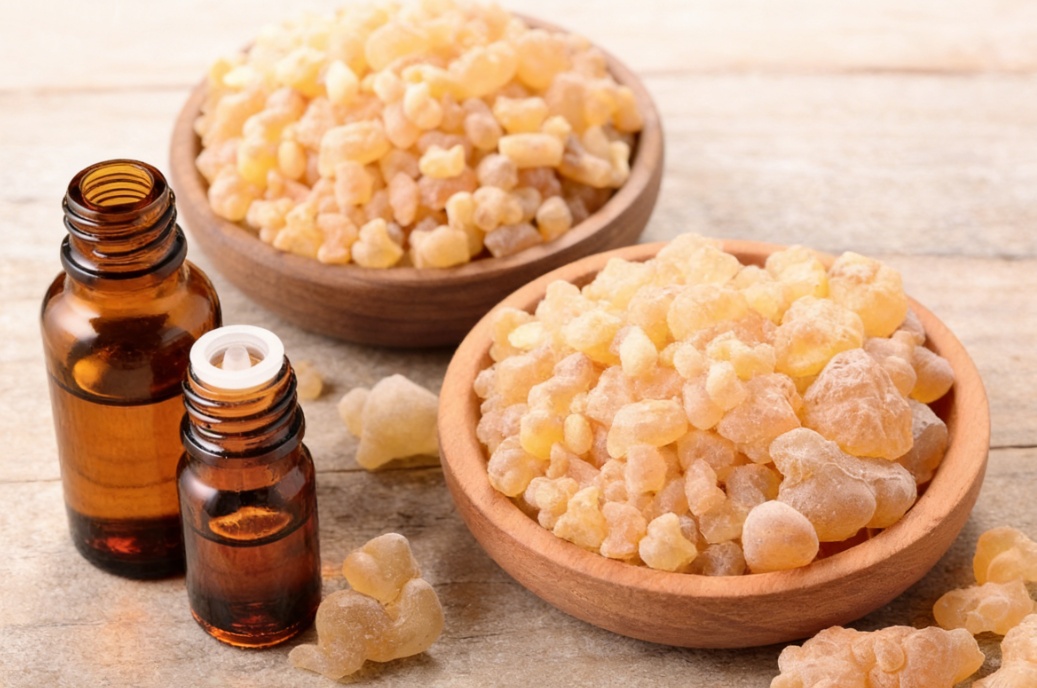
Frankincense extract is an active ingredient extracted from frankincense resin, primarily containing bioactive substances such as boswellic acids. Standardized and purified Boswellia extract has been approved for use in food, dietary supplements, and functional foods in many countries and regions worldwide. The US FDA has listed it as a GRAS (Generally Recognized as Safe) substance, and the EU also permits its use in specific food categories.
Only Boswellia products that meet food-grade standards and have undergone rigorous heavy metal and pesticide residue testing can enter the food supply chain.
What are the specific application areas of food-grade Boswellia extract?
Dietary supplements: This is the main application area for frankincense extract, usually appearing in capsule or tablet form, primarily targeting joint health and anti-inflammatory functions.
Functional beverages: Some sports recovery drinks and anti-inflammatory functional beverages are beginning to add water-soluble Boswellia extract to meet consumer demand for natural anti-inflammatory ingredients.
Medical foods: frankincense extract is widely used as a core functional ingredient in specific medical foods formulated for people with degenerative joint diseases.
Traditional food innovation: In the Middle East and Indian markets, frankincense extract is being reapplied to modern chewing gum, candies, and other products, giving traditional ingredients new commercial value.
For purchasing managers, the specifications required for frankincense extract vary significantly depending on the application scenario – dietary supplements typically require a boswellic acid content of over 65%, while beverage applications focus more on water solubility and taste compatibility.
What are the safe dosage and regulatory boundaries for consuming frankincense extract?
Even if Boswellia extract is confirmed to be edible, B2B buyers still need to strictly control dosage compliance. Regulatory standards vary across countries:
EU: frankincense extract is used as a traditional herbal medicine, with a recommended daily intake of usually 300-1200mg of boswellic acid.
US: The FDA has not set specific limits, but mainstream products on the market contain between 300-500mg of extract per serving.
China: As a new food ingredient, frankincense extract requires administrative approval and currently mainly relies on imported raw materials for cross-border e-commerce channels.
Japan: Permitted for use in specific health foods (FOSHU), requiring separate declaration of functional ingredients.
When purchasing internationally, it is crucial to note that different specifications from the same supplier may correspond to different compliance pathways. Food-grade, cosmetic-grade, and pharmaceutical-grade frankincense extracts differ fundamentally in extraction solvents, purity, and testing standards. Procurement contracts must clearly specify the intended use and specifications to avoid compliance risks.
How to choose a reliable food-grade frankincense extract supplier?
Confirming that the frankincense extract is edible is only the first step; finding a stable and compliant raw material supplier is the core challenge for B2B procurement. A high-quality supplier should possess the following characteristics:
Complete traceability system: Able to provide full-chain traceability from resin collection to finished product delivery, ensuring a stable source of raw materials.
Comprehensive testing capabilities: In addition to conventional physical and chemical indicators, they should have third-party testing capabilities for heavy metals (lead, arsenic, mercury, cadmium), pesticide residues, microorganisms, and frankincense acid content.
Customized service capabilities: Provide customized solutions with different specifications and dosage forms based on the customer's end application (water-soluble beverages vs. oil-soluble soft capsules).
Complete international certifications: ISO22000, HACCP, Kosher, Halal, etc., are basic requirements for entering the global supply chain.
Inventory and logistics advantages: Possess overseas warehousing capabilities to shorten delivery cycles and reduce inventory pressure for cross-border procurement.
Why choose Xi'an Sost Biotech Co., Ltd.?
Assuming the frankincense extract is edible, Xi'an Sost Biotech Co., Ltd., as a professional global supplier of botanical extracts, provides trustworthy food-grade frankincense extract solutions for B2B customers:
Technical strength: Possesses a standardized extraction workshop and HPLC testing laboratory, with customizable frankincense acid content ranging from 10% to 90%, meeting diverse needs from ordinary food to high-end dietary supplements.
Quality assurance: Strictly implements the ISO22000 food safety management system, with a complete COA for each batch of products, and heavy metal and pesticide residue indicators meeting EU, US, and Chinese standards.
Application support: Equipped with a professional R&D team to assist customers with formula adaptation, stability testing, and regulatory consulting, reducing product development cycles.
Supply chain advantages: Has overseas warehouses in the United States, with spot inventory supporting small-batch trial orders and stable supply guaranteeing large-scale production needs. For cross-border e-commerce customers, we can provide private label packaging and compliance document support. Contact Information:
Email: ericyang@xasost.com
References:
Siddiqui M.Z. Boswellia serrata, a potential antiinflammatory agent: an overview. Indian J Pharm Sci. 2011.
EMA. Assessment Report on Boswellia serrata Roxb. European Medicines Agency. 2016.
FDA. GRAS Notice Inventory. U.S. Food and Drug Administration.


Any questions or suggestions?
We are here to help with whatever you need.


Copyright © Sost Corporation Co.,Ltd. All rights reserved.


