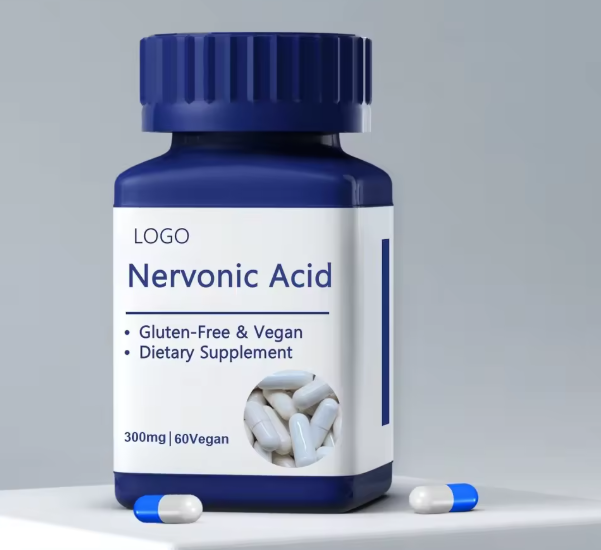
Nervonic acid, scientifically known as cis-15-Tetracosenic Acid, is a monounsaturated very long-chain fatty acid with the chemical formula C24H46O2. It was first isolated in 1925 by scientist Klenk from cerebrosides in human and bovine brains, and later extracted from shark oil in 1926, hence its former name "shark oil acid."
As a naturally occurring substance in nervous tissue, nervonic acid is a core component of brain nerve cells and nervous tissue, especially abundant in white matter. British scholar A.J. Sinclair proposed in 1972 that the brain is composed of white and gray matter, with DHA (docosahexaenoic acid) being a typical gray matter fatty acid, while nervonic acid is a typical white matter fatty acid. The health of white matter is directly related to the efficiency of nerve signal transmission, and nervonic acid is a core raw material for myelin synthesis. Myelin acts like an "insulating layer" surrounding nerve fibers; if damaged, it can lead to impaired nerve signal transmission, resulting in cognitive decline, motor dysfunction, and other problems.
What are the important roles of nervonic acid in brain health?
Nervonic acid has attracted considerable attention primarily due to its multiple benefits for the brain and nervous system. First, it promotes the repair and regeneration of damaged nervous tissue. Whether the nerve damage is caused by stroke, traumatic brain injury, or neurodegenerative diseases, nervonic acid can stimulate the proliferation and differentiation of neural stem cells, helping to repair damaged nerve fibers and restore nerve conduction function.
Secondly, nervonic acid helps to slow down brain aging. As we age, the body's ability to synthesize nervonic acid gradually declines, becoming significantly reduced after the age of 30, and possibly only one-quarter of that of young people by the age of 60. This is closely related to memory loss and cognitive decline. Supplementing with nervonic acid can improve brain metabolism, enhance the activity of nerve cells, and improve the efficiency of brain electrical activity, thus to some extent preventing diseases such as Alzheimer's disease and Parkinson's disease.
Furthermore, nervonic acid can increase the speed of signal transmission between nerve cells, enhancing brain cognitive function, memory, and learning ability. For individuals engaged in long-term, high-intensity mental work, students preparing for exams, or middle-aged and elderly people experiencing memory decline, scientifically supplementing nervonic acid is beneficial. It's worth noting that nervonic acid can naturally penetrate the blood-brain barrier, directly providing nutritional support to the brain, something many other nutrients cannot do.
What are the sources of nervonic acid? Why has plant extraction become the mainstream method?
Initially, the main sources of nervonic acid were shark brain tissue and fish oil. However, due to international fishing bans and the need for ecological protection, shark-derived sources have been withdrawn from commercial use. Now, scientists have turned their attention to plant resources. Chinese scientists have discovered that some plant seeds also contain nervonic acid, the most representative of which is the seed of the Acer truncatum tree.
Acer truncatum is a tree species unique to my country, and its seeds are rich in oil, with a nervonic acid content of 5%-7%. In 2011, the National Health Commission officially approved Acer truncatum seed oil as a new resource food, opening the way for the industrialization of plant-derived nervonic acid. In addition, rapeseed oil and Xanthoceras sorbifolia oil also contain a certain amount of nervonic acid, but Acer truncatum seed oil, due to its stability and high nervonic acid content, has become one of the most important natural sources.
Through modern bioengineering technology, high-purity nervonic acid can be extracted from these plant oils. For example, using advanced processes such as molecular distillation and urea inclusion, the purity of nervonic acid can be increased to over 90%, far exceeding the content in directly consumed plant oils. This makes the application of nervonic acid in health products, functional foods, and pharmaceuticals possible.
How to scientifically select and identify nervonic acid products?
First, pay attention to the compliance and safety of the product. Legitimate nervonic acid products should have certifications from relevant national departments, such as the "Blue Hat" mark, indicating that they have undergone rigorous safety and efficacy assessments.
Secondly, check the nervonic acid content and raw material source of the product. Some products may simply be ordinary plant oils with low nervonic acid content, while high-purity nervonic acid products are usually in powder or tablet form, with higher content and better absorption. Furthermore, be wary of products that confuse concepts, such as mixing DHA, EPA, or phosphatidylserine with nervonic acid. Consumers should carefully read product labels and identify the active ingredients.
Is nervonic acid supplementation suitable for everyone? Although nervonic acid is beneficial for brain health, it's not suitable for everyone to supplement it indiscriminately. Special populations such as pregnant women, breastfeeding mothers, and infants should use it under the guidance of a doctor. Furthermore, individuals allergic to nervonic acid and those taking antihypertensive medications should exercise caution to avoid potential adverse reactions or drug interactions. Excessive intake of nervonic acid may also cause discomfort such as diarrhea and nausea; therefore, following recommended dosages and supplementing scientifically is crucial.
Who is a reliable supplier of nervonic acid raw materials?
In the industrialization process of nervonic acid, choosing a supplier with advanced technology and reliable quality is essential. Xi'an Sost Biotech is such a high-tech enterprise specializing in the research and development and production of natural plant active ingredients. Located in the Xi'an High-tech Industrial Development Zone, the company leverages the abundant local plant resources and scientific research advantages to provide high-quality natural extracts to the global health food, functional food, and cosmetics industries.
The company's flagship nervonic acid product is mainly extracted from maple seeds, using advanced extraction and purification processes to ensure high purity and high activity. Whether for developing new brain health products or as a raw material for functional foods, Xi'an Sost Biotech can provide stable, safe, and efficient nervonic acid products. If you have any related needs, please contact us via email at ericyang@xasost.com. We will wholeheartedly provide you with professional product consultation and technical support to jointly promote the development of brain health.
In summary, nervonic acid, as a key nutrient for brain health, is being recognized by more and more people. Scientific understanding and rational selection will help us better protect our brains and improve our quality of life.


Any questions or suggestions?
We are here to help with whatever you need.


Copyright © Sost Corporation Co.,Ltd. All rights reserved.


