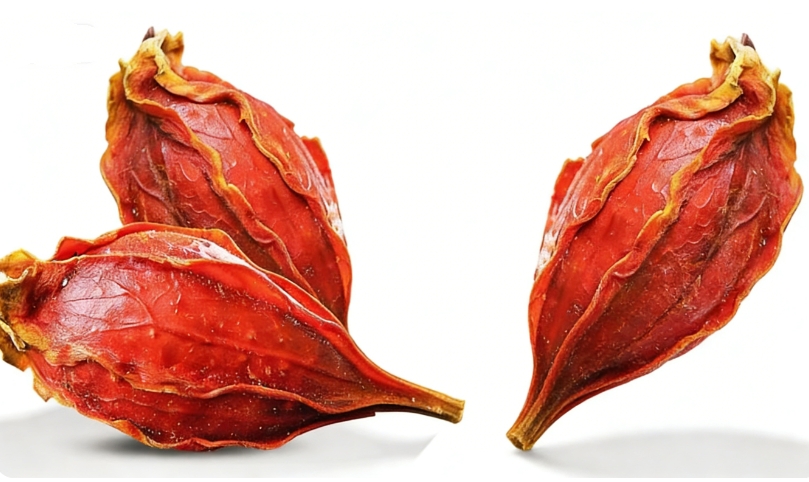
In the remaining mountain ranges of the Qinling Mountains in Xixia, Henan and Foping, Shaanxi, at altitudes of 800-1200 meters, clusters of Cornelian cherry trees grow along the edges of the warm and humid mountain slopes. This deciduous tree, scientifically known as *Cornus officinalis*, commonly called "Zao Pi" (Chinese date peel), has mature, dried fruit pulp that is a classic ingredient in traditional Chinese medicine for "tonifying the liver and kidneys, and astringing and consolidating." It is also a core component of famous traditional prescriptions such as "Liuwei Dihuang Wan" and "Zuogui Wan." Today, Cornelian cherry extract, refined using modern bio-extraction technology, has become a popular raw material in functional foods, health products, cosmetics, and pharmaceuticals, thanks to its clearly defined active ingredients and multiple health benefits, and is highly favored by B2B buyers and end brands.
I. Authentic Origin and Raw Material Advantages: Ensuring Quality from the Source
The quality of Cornelian cherry is highly correlated with its growing environment; the geographical conditions of the authentic producing areas directly determine the content of active ingredients in the raw materials. Xixia, Henan, known as the "Home of Chinese Cornelian Cherry," boasts a national-level Cornelian cherry planting base. The area has a mild and humid climate, with an average annual temperature of 15.2℃ and annual rainfall of 800-1000 mm. The soil is mainly sandy loam, rich in humus, providing unique conditions for the growth of Cornelian cherry trees. With a planting history of over 2000 years, the area employs a "wild cultivation + standardized planting" model, without the use of chemical pesticides and fertilizers, ensuring that the fruit pulp is free of heavy metal residues and pesticide exceeding limits.
The selection of high-quality Cornelian cherry raw materials is equally rigorous. Harvesting must be concentrated in October-November when the fruit is mature (the peel turns red and the pulp is soft). After manual harvesting, the pits are immediately removed, and the fruit is naturally air-dried or low-temperature dried until the moisture content is ≤13%, preventing the loss of active ingredients. The raw materials must comply with the standards of the *Pharmacopoeia of the People's Republic of China*: the fruit pulp is in irregular flakes or sacs, 1-1.5 cm long and 0.5-1 cm wide, with a purplish-red to purplish-black surface, wrinkled and glossy; it has a faint odor and a sour, astringent, and slightly bitter taste, with a loganin content of no less than 0.60%.
Compared with ordinary production areas, the *Cornus officinalis* fruit pulp from authentic production areas has a 30% higher content of iridoid glycosides (loganinin and morroniside), and is also richer in polysaccharides and triterpenic acids, laying the foundation for the high potency of subsequent extracts. For B2B buyers, choosing raw materials from authentic production areas is the first step in ensuring product efficacy and market competitiveness.
II. Analysis of Core Components: Multiple Health Benefits of Active Substances
The core value of *Cornus officinalis* extract stems from its complex and highly effective combination of active ingredients. Modern pharmacological research has confirmed that the following three types of components are key to its health benefits:
1. Iridoid Glycosides (Loganin and Morroniside) – Core for Liver Protection and Neuroprotection
As the most abundant active components in *Cornus officinalis* extract (total content can reach 5%-10% in high-quality products), the pharmacological effects of loganin and morroniside are the most clearly defined. Multiple animal experiments and clinical studies have shown that loganin can significantly reduce the levels of ALT (alanine aminotransferase) and AST (aspartate aminotransferase) in the serum of carbon tetrachloride-induced liver injury rats, inhibit hepatocyte apoptosis, and enhance the liver's antioxidant capacity and detoxification function by regulating the COX-2/Nrf2 signaling pathway. In terms of neuroprotection, loganin can improve the learning and memory abilities of Alzheimer's disease model mice and reduce β-amyloid protein deposition in the brain, providing important raw material support for the development of brain-enhancing health products.
2. Polysaccharides – Mainstay for Immune Regulation and Antioxidant Activity
*Cornus officinalis* polysaccharides are water-soluble polysaccharides composed of glucose, fructose, arabinose, etc., accounting for approximately 15%-20% of the extract. Research has found that this polysaccharide can stimulate the proliferation and activation of macrophages and lymphocytes, enhance the ability of immune cells to recognize and eliminate pathogens, and promote the secretion of immunoglobulins (IgG, IgM), regulating the body's defense system from both "enhancing immunity" and "balancing immunity" aspects. In addition, Cornus officinalis polysaccharide has significant antioxidant capacity, with a DPPH free radical scavenging rate of over 75%, effectively clearing excess free radicals in the body, reducing oxidative stress damage to cells, and delaying skin aging and bodily function decline.
3. Triterpenic Acids (Ursolic Acid, Oleanolic Acid) – Anti-inflammatory and Metabolic Regulation Assistants
Ursolic acid and oleanolic acid are present in Cornus officinalis extract at a concentration of approximately 2%-5%. Both have significant anti-inflammatory activity, inhibiting the release of inflammatory factors such as TNF-α and IL-6, and have an auxiliary conditioning effect on inflammatory diseases such as rheumatoid arthritis and gastroenteritis. At the same time, ursolic acid can also regulate glucose and lipid metabolism, lowering triglyceride and cholesterol levels in hyperlipidemia model rats and improving insulin resistance, providing a natural raw material option for weight management functional foods.
In addition to the above core components, Cornus officinalis extract also contains various trace elements such as vitamin C, vitamin E, calcium, iron, and zinc, which synergistically interact with the active ingredients to form a "multi-dimensional health" efficacy system, covering multiple areas such as immune regulation, liver protection, antioxidant, anti-inflammatory, and neuroprotection, adapting to the research and development needs of different products.
III. Extraction Process and Quality Control: Fine-tuned Management from Raw Materials to Finished Products
The production of high-quality Cornus officinalis extract requires a scientific extraction process and strict quality control. The production process of reputable manufacturers typically includes the following key steps:
1. Extraction Process: Primarily low-temperature water extraction, balancing efficiency and activity.
The mainstream process uses "low-temperature water extraction + membrane separation purification" technology: Dried Cornus officinalis fruit pulp is crushed to 20-40 mesh, 8-10 times the amount of purified water is added, and extraction is performed twice at a constant temperature of 60-70℃ for 2 hours each time (low temperature prevents the decomposition of iridoid glycoside components); the extract is filtered through a plate and frame filter to remove impurities, and then separated and purified through an ultrafiltration membrane (molecular weight cut-off value of 10000 Da), and concentrated to an extract with a relative density of 1.2-1.3; finally, it is spray-dried (inlet air temperature 180℃, outlet air temperature 80℃) to produce a powder with a moisture content controlled below 5%.
Some high-end products use a "water extraction + alcohol precipitation" process to further improve the purity of active ingredients, but the ethanol residue must be controlled (≤0.5%) to ensure compliance with food-grade standards. Compared with traditional hot reflux extraction, modern processes can increase the retention rate of active ingredients to over 85%, significantly better than the 60% of traditional processes.
2. Quality Control: Multiple tests to ensure compliance and potency.
Reputable manufacturers establish a comprehensive quality control system, with key testing items including:
Raw material testing: Heavy metals (lead ≤0.5mg/kg, cadmium ≤0.3mg/kg), pesticide residues (in compliance with GB 2763 standard), moisture content, loganin content;
Process testing: pH value and solid content of the extract, concentration of active ingredients after purification;
Finished product testing: Loganin content (≥1.0%), total iridoid glycoside content (≥3.0%), polysaccharide content (≥10%), microbial limits (total bacterial count ≤1000 cfu/g, mold and yeast ≤100 cfu/g, no pathogenic bacteria). The finished product must be accompanied by a Certificate of Analysis (CoA) issued by a third-party testing agency, clearly stating the test results for various indicators to ensure that the product complies with GB 16740 (General Standard for Health Foods), USP (United States Pharmacopeia), or EP (European Pharmacopoeia) standards, meeting market access requirements in different regions.
IV. Application Scenarios and Market Demand: Popular Raw Materials Covering Multiple Fields
The diverse efficacy of Cornus officinalis extract makes it widely applicable in multiple fields, and market demand continues to grow:
1. Health Products: Primarily immune regulation and liver protection products
Immune regulation: Combined with Ganoderma lucidum extract and Astragalus extract to make capsules and tablets, suitable for middle-aged and elderly people and those with low immunity;
Liver protection: Used as a core ingredient to make liver-protecting tea and capsules, targeting people who stay up late and those at high risk of alcoholic liver disease;
Kidney tonifying: Combined with Epimedium and Cuscuta extract to develop kidney-tonifying and essence-replenishing health products, meeting men's health needs.
2. Cosmetics: Antioxidant and anti-inflammatory skincare products
Anti-aging skincare products: Added to face creams and serums to improve skin wrinkles and dullness by scavenging free radicals and promoting collagen synthesis;
Anti-inflammatory and repairing products: For sensitive and acne-prone skin, using its anti-inflammatory components to relieve skin redness and itching;
Hair growth products: Combined with ginger extract and ginseng extract to make shampoos and hair growth liquids to help improve hair loss problems.
3. Pharmaceutical Field: Traditional Chinese Medicine and Innovative Drug Raw Materials
In traditional Chinese medicine, Cornus officinalis extract is a core ingredient in classic prescriptions such as Liuwei Dihuang Pills and Jin Kui Shen Qi Pills; in innovative drug research and development, its active ingredient, loganin, has been used in clinical trials for liver protection and neuroprotection drugs, showing huge market potential.
4. Functional Foods: Healthy Beverages and Dietary Supplements
Functional beverages: Added to herbal teas and sports drinks to enhance the health benefits of the products;
Dietary supplements: Made into oral solutions and chewable tablets, suitable for children, the elderly, and other special groups.
V. Supplier Recommendation: Xi'an Sost Biotech – A High-Quality Supplier Specializing in Cornus Officinalis Extract
Xi'an Sost Biotech, a professional supplier with over 10 years of experience in the plant extract field, has become a benchmark enterprise in the Cornus officinalis extract industry, trusted by B2B buyers worldwide, thanks to its authentic raw materials, advanced technology, and strict quality control.
The company relies on its authentic Cornus officinalis planting base in Xixia, Henan Province, and has established an integrated supply chain of "planting - harvesting - processing - testing." All raw materials come from organically certified bases, with a stable loganin content of over 1.0% and a total iridoid glycoside content of ≥3.0%. The production workshop is GMP certified and uses a "low-temperature water extraction + membrane separation purification" process, ensuring no chemical solvent residue. The products meet multiple standards such as GB, USP, and EP, and can meet the needs of various fields such as health products, cosmetics, and pharmaceuticals.
The company provides full-process quality assurance, with each batch of products accompanied by a third-party CoA report, supporting customized testing of indicators such as heavy metals, pesticide residues, and microorganisms. Customized services are also available, such as adjusting the extraction ratio (5:1-20:1), particle size (80-200 mesh), as well as value-added services such as private label customization and packaging design.
Whether you need to purchase raw materials in bulk or seek product formulation cooperation, Xi'an Sost Biotech can provide professional solutions. For product details, samples, or price inquiries, please contact us through the following methods:
Contact Email: info@sostherbusa.com
Core Advantages: Authentic raw materials, multiple certifications, customized services, stable supply


Any questions or suggestions?
We are here to help with whatever you need.


Copyright © Sost Corporation Co.,Ltd. All rights reserved.


