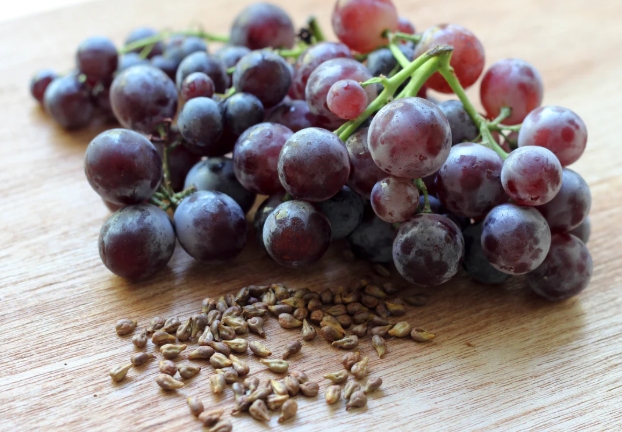
The antioxidant capacity of grape seed extract (GSE) is widely recognized. But can it lower blood pressure? This article will explore this core question, examining its active components, mechanisms of action, and recommended intake, ultimately drawing a reasonable conclusion.
Does grape seed extract lower blood pressure?
Numerous clinical and animal studies have shown that grape seed extract has a certain blood pressure-lowering effect. This is specifically manifested in the following aspects:
1.Improved vascular endothelial function: The core active components of grape seed extract—proanthocyanidins, especially oligomeric proanthocyanidins (OPCs)—can promote the release of nitric oxide (NO), thereby relaxing vascular smooth muscle, improving vascular elasticity, and reducing peripheral resistance.
2.Antioxidant stress: Grape seed extract powder has very strong antioxidant capacity, effectively scavenging free radicals and reducing oxidative stress damage to blood vessels, thus indirectly helping to control blood pressure.
3.Anti-inflammatory and lipid-regulating effects: Grape seed extract synergistically improves overall cardiovascular health by inhibiting the release of inflammatory factors and lowering total cholesterol and low-density lipoprotein (LDL) levels.
Five Core Benefits of Grape Seed Extract - More Than Just Lowering Blood Pressure
1. Anti-aging: By scavenging free radicals and protecting cellular DNA, it slows down organ function decline caused by oxidative damage, especially providing significant protection to the brain and cardiovascular system.
2. Beauty and Skin Care: Known as the "skin vitamin" and "oral cosmetic," it inhibits melanin production, fades dark spots, improves skin elasticity and radiance, and reduces wrinkles and acne scars.
3. Anti-allergy and Immune Regulation:It inhibits histamine release at the cellular level, alleviating allergy symptoms such as rhinitis and eczema. Long-term use helps improve allergic constitution.
4. Radiation Protection: It protects against skin damage caused by ultraviolet rays and radiation from electronic devices, making it suitable for people who spend long periods in front of computers and mobile phones.
5. Cardiovascular and Cerebrovascular Protection: In addition to lowering blood pressure, it also lowers cholesterol, prevents atherosclerosis, and inhibits thrombosis, comprehensively protecting cardiovascular and cerebrovascular health.
How to consume it scientifically?
Although grape seed extract is generally safe, it is still important to consume it scientifically:
Recommended dosage: The general daily intake for adults is 100–300mg, based on products containing 95% proanthocyanidins. The specific dosage should be adjusted according to product instructions and individual health conditions.
Timing of consumption: It is recommended to take it after meals to facilitate absorption and reduce gastrointestinal discomfort.
High-quality grape seed extract raw materials available - SOST US warehouse
Xi'an Sost Biotech Co., Ltd. is a leading company specializing in the research and production of high-purity grape seed extract. Our main product is 95% OPC grape seed extract, which is widely used in health supplements, functional foods, and cosmetics. We have inventory in both of our US warehouses; please contact us to place an order.
Contact Email:ericyang@xasost.com
Reference
1. Rohdewald, P. (2002). A review of the French maritime pine bark extract (Pycnogenol), an orally effective oligomeric proanthocyanidin. Drugs Exp Clin Res, 28(3), 103–110.
2. Guerrero, J. M., et al. (2011). Grape seed extract improves vascular reactivity in postmenopausal women: a randomized, double-blind, placebo-controlled trial. Maturitas, 70(2), 176–181.
3. Ying, L. Y., & Xiao, D. Z. (2014). Antihypertensive effects of grape seed extract: a meta-analysis of randomized controlled trials. Journal of Medicinal Food, 17(6), 633–640.


Any questions or suggestions?
We are here to help with whatever you need.


Copyright © Sost Corporation Co.,Ltd. All rights reserved.


